STATUS - SOLD
Click here for more pictures
Description :
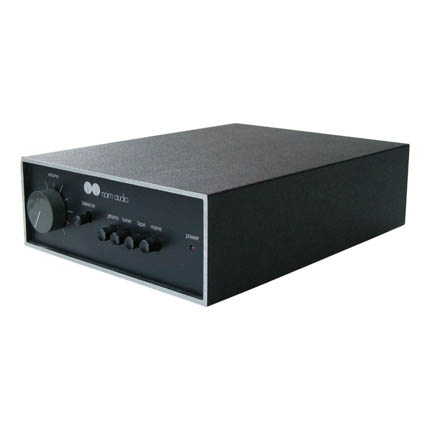
The Naim Audio Nait 1 integrated amplifier is introduced in 1983 which is one of the most controversial and famous integrated amplifiers in the history of HiFi after the glorious NAD 3020. Naim wanted to prove that power and size aren't everything for a good sounding HiFi component and that, moreover, a cleverly designed power supply can be crucial for fine sonic performance. It is distinguished by its small, boxlike proportions and low power. Naim gives few specifications for its products, keeping with their stated philosophy that measurements of audio components are meaningless in choosing among them. The Nait 1 is a small, black, nice aluminium cabinet filled up with high quality discrete components precisely mounted on a single mainboard which included a good MM phono input and a superb Holden & Fisher 100VA toroidal transformer specially made for Naim Audio.
When played, the first thing the listener may notice, perhaps because it comes as totally unexpected, is overall dynamics. This amplifier can follow even the most demanding tracks with ease, provided that the listener doesn't ask for too much sound pressure. It's quick, tempo'ed and pacey, in other words, just to use the common Naimophiles jargon, it has PRaT (Pace, Rhythm and Tempo). It is simply real good at that. As the listener, he just can't help but feel the amplifier is playing the right tempo. Snares and toms are reproduced with lightening quick attack time and perfect decays while bass lines follow the rhythmic patters easily. Electric bass and kick drum can be distinguished even when playing all'unisono. Many amplifiers fail to do that and glue the two bass notes together.
Though the Nait 1 lacks is in ultimate control and detail, but it more than makes up for in realism and and sheer musical communication. Its not the best in sound staging & some details may get lost. But for foot tapping PRaT its a real pleasure & not many modern amps at that level can beat it. The tonal balance is a bit on the warm side, with an audible roll-off at the upper highs and a tilt at the mid-bass so to make the sound "bigger" than it actually is. Really deep bass notes stay a bit "behind" the rest, which is normal. The soundstage is huge, open, three-dimensional, and transparent. Instruments float in space, with center images presented solidly between the speakers. The amplifier's most striking characteristic is the depth of the soundstage. Instruments are separated by a feeling of "air." Through the Nait 1, the speakers tended to disappear into the music. Overall the final result is a perfect blend of pros and cons, giving life to a sound which is well balanced, realistic and lively. The listener just can't help but feel the amp is playing the right tempo.
Specifications :
Inputs.............................................Phono, Tuner, Tape
Phono Sensitivity.............................2.5mV
Tuner & Tape Sensitivity...................75mV
Power Ouput...................................15w/c
Mains supply...................................240V, 50Hz to 60Hz.
Max Power Consumption..................100VA
Dimensions(w x d x h)......................21 x 29 x 8.5 cm
Weight............................................5kg
Miscellaneous :
Made in...........................................UK, England
Condition.........................................8 / 10 (Decent condition)
Reviews :
http://www.tnt-audio.com/ampli/nait_e.html
http://www.stereophile.com/integratedamps/660/index.html
|